Is the Sequence of the Five Elements a Theorem or an Axiom?
Translator's note. The argument of this essay is structural, not chemical. The author's claim is that the standard sequence of the five elements is conditional — a theorem, not an axiom — and he demonstrates it with cases where the sequence is bypassed. Several of the identifications he offers along the way (coal as Wood turned directly into Earth, combustible ice as Metal, photosynthesis as Fire generating Wood) belong to his own working scheme rather than to standard physics or chemistry. They are translated as given, because the argument turns on them. Readers who want the chemistry should read them as the author's analogies, not as claims about chemistry.
What is a theorem? In plain terms, a theorem is a truth with conditions attached — a relative truth.
What is an axiom? An axiom is a truth with no conditions attached — an absolute truth.
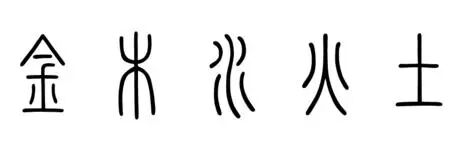
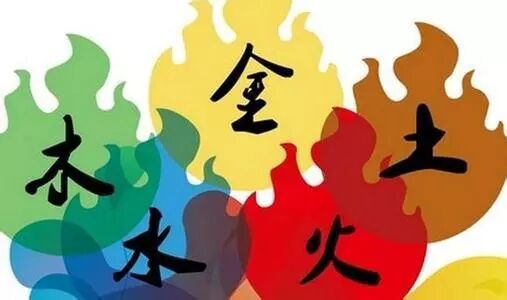
The generating and controlling cycle of Metal, Wood, Water, Fire and Earth is normally given as follows. Generating: Metal generates Water, Water generates Wood, Wood generates Fire, Fire generates Earth, Earth generates Metal. Controlling: Metal controls Wood, Wood controls Earth, Earth controls Water, Water controls Fire, Fire controls Metal.
But that sequence holds only in the general case. Under particular conditions, the order does not run that way at all. Some concrete examples:
1. Water's characteristic is run xia — moistening and sinking downward. Petroleum, gasoline, diesel, alcohol, liquefied gas, kerosene: all of these moisten and sink, so all of them fall within the Water element. Yet these Water substances do not generate Wood. They generate Fire directly.
2. Wood's characteristic is qu zhi — bending and straightening. But at high temperature and pressure with air excluded, Wood can generate Earth directly. Coal, for instance, is Wood converted directly into Earth. Petrified wood is the same thing.
3. Earth's characteristic is jia se — sowing and reaping. Coal is Earth. But coal burns directly into Fire, which is Earth generating Fire. It can also be liquefied, or refined into coal tar, which moistens and sinks and is therefore Water — Earth generating Water.
4. Metal's characteristic is cong ge — following and reforming. Combustible ice, methane hydrate, has that character, so it is Metal. Yet combustible ice burns directly into Fire: Metal generating Fire.
5. Fire's characteristic is yan shang — flaming upward. Light waves, radio waves, magnetic fields, thermal radiation all carry Fire's character and are all Fire. Yet light passing through chlorophyll can convert directly into Wood. Photosynthesis is precisely the conversion of light energy into plant energy — Fire generating Wood. Fats, oils and liquefied gas are Water by element, and all of them are produced by the transformation of Fire — Fire generating Water. Combustible ice is Metal, and it too is produced by the transformation of Fire: Fire generating Metal.
Everything in the world is like this. Nothing in the world develops strictly along the Metal–Water–Wood–Fire–Earth–Metal sequence. This is a fact of science and a fact of the world.
A human being is composed of these five kinds of substance, so a person's fate is determined by their generation and transformation. The bazi — the four-pillar chart used to examine that fate — is built from Stems and Branches that carry these five properties. If the material world does not develop only along the standard sequence, then the five-element sequence inside a bazi does not run only that way either. Which is why the ancients had the categories of hehua — combining and transforming — and heju and huiju, combining and meeting into a structure.
So why can the five elements generate across the standard order?
Because in their essential nature, Metal, Wood, Water, Fire and Earth are one and the same thing. They are given different names only because that one thing performs different functions and produces different effects.
Consider big-bang cosmology. The universe formed when a “singularity” exploded and particles of like nature spread outward. If that account is correct, then everything in the universe — however unlike on the surface — is made of the same basic constituents. Modern physics confirms it: a flower, a pile of dung, a dog, a person, all children of the same mother.
That is why Wood generates Earth (a tree becomes coal), Fire generates Wood (light energy becomes a tree), Water generates Fire (oil burns directly), and so on, outside the standard order. It is also why a single object can carry several elements at once.
Gold is Metal — it is a metal — and also Earth. Gold reflects yellow light and absorbs the rest; yellow light has a different wavelength from the others, and its force on other things differs accordingly, which places it in Earth. Baijiu, Chinese liquor, is Water, because it moistens and sinks, and also Fire, because the alcohol in it burns.
Only when this is understood can objects be selected precisely when adjusting a site or remedying a condition. Otherwise the remedy backfires.
Suppose a chart needs Metal. Platinum, which is purely Metal; gold, which is Metal and Earth; silver — these are not interchangeable.
Suppose it needs Earth. Petrified wood is Earth and Wood. A white pearl is Earth and Metal. A yellow pearl is purely Earth. Amethyst is Earth and Fire. Clear quartz is Earth and Water, since colourless transparent objects belong to Water. These differ substantially.
Suppose it needs Wood. Black rosewood is Wood and Water. Red suanzhi is Wood and Fire. Again, not the same instrument.
What matters in study is understanding the principle. Once the principle is clear, no technical problem remains difficult. But if you do nothing but listen to masters pronouncing what has which property, you will never get through the door of prediction.
Source:WeChat public account “Shikongren Coordinates” (时空坐标) · by Lü Wenyi
Chinese original:五行相生的顺序是定理而非公理
Notice:This is a study archive. Copyright remains with the author. Nothing here constitutes advice.