Why Do People Born Under the Same Bazi Have Different Fates?
Translator's note. The founding paper of the whole system, dated 2003. Its argument is a pincer: any theory that cannot explain why the fifteen hundred people born in the same two-hour window have different fates is useless, and any theory that solves it by asking the client for his family background, education or ambitions has refuted itself. Lü's answer is the direction in which a fixed quantity of hidden energy is spent — five flowers, one hundred units of water — and the conclusion is deliberately modest: the method reads a surface, never a point.
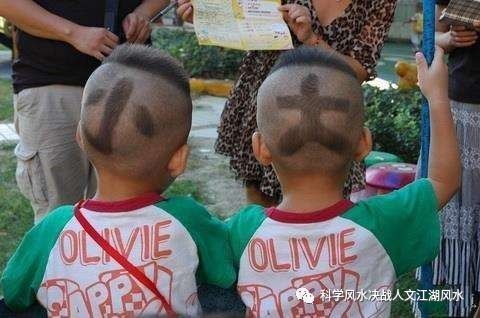
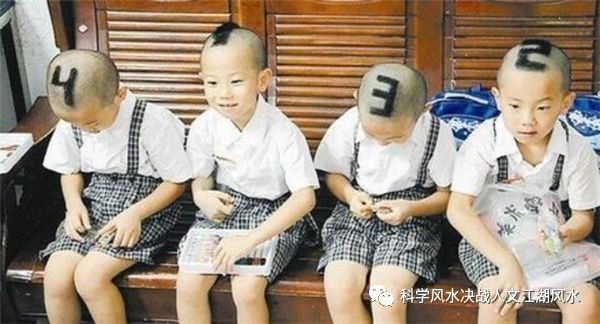
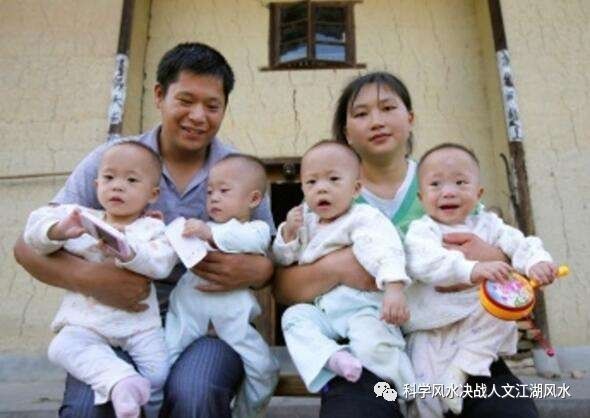
The greatest unsolved puzzle in Chinese bazi prediction is the differing fates of “five-fold coincidences.” Unless a student of bazi can solve it, accurate prediction is practically a fantasy. By the state family-planning statistics for 1998 — and the Beijing maternity hospital alone delivered more than ten thousand babies in 2003, an average of thirteen per two-hour period — about three thousand children are born in China in each two-hour period. Halving that for sex gives nearly fifteen hundred five-fold coincidences. It is certain that not all of those fifteen hundred become provincial governors because one of them did. And if the rest did not, then without a solution to the problem of their differing fates, accurate prediction by traditional bazi theory is absolutely impossible; any occasional hit is coincidence, not necessity.
On the question of the differing fates of five-fold coincidences, a Mr Li of Shandong has given, across the ages, the most comprehensive explanation. In a chapter titled “Four Differences Among Identical Bazi” in his book on Chinese bazi prediction, Mr Li explains that five-fold coincidences differ first because their family status and circumstances differ, second because their education differs, third because the height of their ambitions differs, and fourth because their feng shui environments differ.
Mr Li's explanation may be the most comprehensive ever offered, but a closer look shows it to be pure nonsense. Why? Because on his account: first, without asking the client about his family's status we cannot predict at all; second, without asking about his education we cannot predict; third, without asking how high his ambitions run we cannot predict; fourth, without seeing his feng shui we certainly cannot predict. If we do not consult on those four conditions, we can never predict the fate of those fifteen hundred people by traditional Chinese bazi theory. But if we do consult on them, as Mr Li says we must — then what becomes of his own claim that “from the bazi alone one can accurately judge the client's family background, the level of his diploma, the degree of his wealth and rank and the length of his life, and the feng shui of his birthplace (what Mr Li calls bazi feng shui)”? Is that not contradicting himself and slapping his own face? Is that not publicly admitting that his bazi theory is invented nonsense? So: whether a theory can solve the puzzle of five-fold coincidences is the only theoretical standard for judging whether a bazi theory is correct.
Taking what is correct from earlier theory, joining it to the logic of ordinary human affairs, and analysing bazi theory with dialectical materialism, we have solved the puzzle completely. This is an original article by Lü Wen-yi.
We hold that the differing fates of people of the same sex born in the same year, month, day and hour are decided entirely by each person's ancestral grave and the feng shui of the home during pregnancy (and as for family background, education and personal ambition, these too are ultimately decided by the yin dwelling and the yang dwelling). Why? We already know that the ancestral grave and the pregnancy home decide the quality of a fate, and that the new ancestral grave and the home after birth only cause fluctuations in the degree of that quality. Here we set aside the causes of the difference and ask only how prediction should handle it.
Before that, two ideas must be clear: “a person's fate-energy” and “the direction in which fate-energy is expressed.” Fate-energy is the energy contained in the person himself — hidden energy, not manifest energy. Different substances contain different hidden energy (a kilogram of coal and a kilogram of uranium differ in hidden energy by a factor of many billions, while their manifest energy is the same: one kilogram). In the same way, different people contain absolutely different hidden energy. The more auspicious hidden energy, and the greater, the better the fate, the greater the wealth and rank, the longer the life; and where auspicious hidden energy is scant, there is only poverty, meanness, early death, childlessness and misfortune. Every substance contains a fixed quantity of hidden energy, not an unlimited one. And precisely because each person's hidden energy is a fixed value, the question arises of how that energy is allocated among the different aspects of a fate. That is the question of the direction in which fate-energy is expressed.
Everyone has five auspicious needs: wealth, office (career), marriage, children, and lifespan. Picture these five as five pots of flowers. Suppose someone's hidden fate-energy is one hundred units of water. Spread the hundred evenly and each pot gets twenty. Allocate fifty to the office pot, thirty to wealth, ten to children and ten to lifespan, and the marriage pot must parch. From that allocation we can say: great office, much wealth, ordinary children, ordinary lifespan, disastrous marriage. In real life there is absolutely no one with the greatest office, the most wealth, the most and best children, the longest life and the best marriage. Most people have a mix of good and bad among the five needs. Even if five-fold coincidences had the same quantity of hidden energy, they would differ in fate because the energy is expressed in different directions — and in fact, five-fold coincidences also differ in the quantity of hidden energy, because their feng shui environments differ. Understand these two ideas and you understand the real inner reason why five-fold coincidences have different fates. And having understood the direction of expression, friends in yixue will also understand how much truth there is in the advertising of those masters who claim to “read from the bazi alone, and tell you on such-and-such a day of such-and-such a month in such-and-such a year exactly what will happen; read from the bazi alone, and tell you how great your office will be, how rich you will be, how high your diploma, whether your first child is a boy or a girl, and where you rank among your siblings.”
The cause of the difference has been found. How is it to be applied in practice?
In prediction, only by correctly applying the direction of expression can the reading be accurate. Using dialectical materialism joined to the logic of ordinary affairs, the Lü-school bazi theory has solved the age-old puzzle of “same bazi, different fate.” Its “ten gods by mode of interaction” method accurately determines the basic auspicious or inauspicious information in six areas for a given chart in a given year: wealth, office, injury and illness, marriage, lawsuits, and imprisonment. Then, by the principle of the direction of expression, it makes an accurate judgement about each area. For example:
Male: Bingwu, Gengyin, Wushen, Jiayin
Luck cycle: Jiawu. Annual cycle: Jiashen (2004).
In the jiashen year under the jiawu cycle, the officer-and-killer is in chaotic motion, which is inauspicious; the eating-and-wounding clashes the officer-and-killer, which is auspicious; the annual eating-and-wounding shen metal takes its position at the day branch, which means wealth. From the method of modes of interaction, the basic information for this chart in the jiashen year is: there will be lawsuits and disputes, there will be injury or illness, money can come in, there is marriage information (or a lover appears), career is unfavourable, there is information of imprisonment. But we know that so many signals will not all necessarily happen to one person, and that not everyone born under this chart will have the same things happen. This is only basic information. To predict correctly for everyone born under the chart, the basic information must be integrated by the principle of the direction of expression. Integrated, we reach this conclusion: “In the jiashen year under the jiawu cycle there should be lawsuits and disputes, and injury or illness; money can be made, but career development will not go smoothly; there is marriage information or a lover appears. If there are no lawsuits and no injury or illness, then there will certainly be loss of money, and no marriage or lover. If there are lawsuits or injury, then money will certainly be made, marriage or a lover will certainly appear, and the career will develop smoothly.”
Friends in yixue may feel this integrated conclusion is unsatisfying — not quite the clean strike they wanted. But it is objectively in accord with reality, and objectively in accord with the situation of all five-fold coincidences. If the client supplies the direction of his question when he comes, then the conclusion of the mode-of-interaction method can be used directly; if he does not, only the integrated conclusion will do. Because those born under the chart certainly do not all have lawsuits, do not all have injury, do not all make money, do not all acquire lovers, do not all make exactly a hundred thousand, do not all have gallbladder surgery. So prediction by bazi can reach a directional surface, and can never reach a precise point. Friends who do not believe this theory are destined to fall flat on their faces on the yixue road, and to be cheated very badly indeed.
The theory of the differing fates of five-fold coincidences is the most fundamental standard for judging whether a bazi predictive theory is scientific and usable.
Shandong, Zaozhuang, May 2003
Source:WeChat public account “Shikongren Coordinates” (时空坐标) · by Lü Wenyi
Chinese original:八字相同为何命运不同?
Notice:This is a study archive. Copyright remains with the author. Nothing here constitutes advice.