What Fate Prediction Actually Is
Translator's note. The answer to the oldest joke in the trade. One foot inside the door and one out: tell me which way I will move, and I will do the opposite. A bird in a sage's hand: alive or dead? The paradox dissolves only if you see what prediction is actually predicting — the outcome of things following natural law, not the outcome of things defying a prediction they have been told. From that follows the “principle of correct consciousness” and the rule that a disaster avoided is not a disaster cancelled: the energy must go somewhere.
Long-press the QR code to follow.
A single slap can kill a fortune-teller. Do you know what kind of slap?
Everything has a fate; it is not only people. The whole course of a thing's arising, developing and changing is that thing's fate. A person, a bird, a pen, a sheet of paper, a car — each has its own fate.
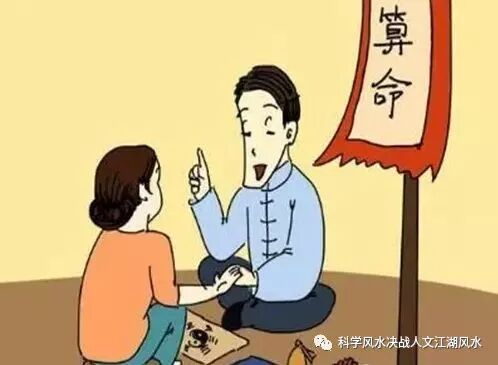
What is the essence of fate prediction? Every master has a flawless-sounding answer ready. But:
Suppose someone stands in a doorway with one foot outside and one foot in, and asks: Master, can you predict whether I will go out or come back in? At that, most masters would not know what to do.
In antiquity there was a sage who held a small bird in his hand and put the question to Shao Kangjie — the most famous predictor of the old world: predict whether this bird will be dead or alive an hour from now. The old books record neither how Shao Kangjie answered nor who won. But from these two mocking questions we can see how very few predictors, from antiquity to now, have understood the essence of their art. Masters may have formidable technique, yet faced with this kind of trap they fall silent — because they know that whatever they answer, the other party will act against it. Predict that he goes out, and he will step back in; predict that he comes in, and he will go out. Predict that the bird lives, and the sage crushes it; predict that it dies, and he lets it go. So whatever answer the master gives, the actual outcome makes it wrong.
Faced with this mockery, which is as old as the art itself, we should not blame the people who ask the question. We should reflect on ourselves, and on our own theory. We are the masters, the experts, the scholars. If we cannot surpass ourselves, if we cannot resolve the paradox inside our own theory, what face have fortune-tellers and feng shui masters left for playing the oracle about the affairs of the world?
So anyone who practises Yijing prediction or environmental feng shui should, while mastering the technique, also think philosophically about the core questions of the art. These two mocking questions are in fact not difficult at all. They became an ancient joke at our expense for one reason only: the masters never understood what the essence of fate prediction is.
Once you understand that, the joke stops being a problem.
Because the essence of fate prediction is to predict the outcome that arises when people and things follow natural law in their development and change — not to predict the new outcome that arises when people and things, having been told the predicted outcome, act against that natural law.
Having understood this, we can predict with complete accuracy whether the man with one foot in the doorway will go out or come back in, and whether the sage will release the bird or crush it. Let me explain, for some may still not see it. Provided the theory of the technique contains no error, we write the prediction on a piece of paper. We do not tell the man in the doorway what we have written. We do not tell the sage holding the bird. We wait quietly for the natural outcome to appear. When it appears, we make public the prediction — which has been in the custody of a third party all along — and it will be found a hundred per cent accurate.
Why? Because, as said, the essence of prediction is the natural law of change in people and things. Not telling the sage or the man in the doorway is precisely what allows the natural outcome to occur. Tell them, and they will act against the natural law — and then we are no longer inside the principle of prediction at all.
In practice we often use exactly this to avert disaster. It is what I call the principle of correct consciousness among the five principles of averting disaster. With it we may act against the natural law of a human affair in order to adjust a fate — though only within the level of fate fixed by the prenatal environment, moving up and down inside that level, never crossing to another.
Suppose we predict a car accident tomorrow. We can perfectly well stay somewhere an accident absolutely cannot happen, and that guarantees no accident. But a disaster is a form of energy. Acting against natural law in this way guarantees no crash, yet the energy of the disaster will still discharge in some other form: a quarrel with family, money borrowed by a relative or friend and not returned, a valuable thing broken, a fall and an injury. Through the principle of correct consciousness we can still choose, actively, a form we are willing to accept. Having actively avoided the crash, we should also actively dissolve that energy — give blood two or three days in advance, give a sum of money to public welfare, and so on. Avoid it and do nothing else, and you will “escape the first day but not the fifteenth,” escape this disaster but not the next.
So the most effective way to dissolve a disaster is the method of energy conversion, and the principle of energy conversion is also the essential principle of fate prediction.
The essence of fate prediction is to predict the outcome that arises when people and things follow natural law — not the new outcome that arises when, having learned the predicted outcome, they act against it a second time.
A person is matter. The movement and change of all matter follows law. Find the law, and predicting a human fate is entirely possible. So a fate can be predicted; the technique is scientific and not in the least superstitious.
Source:WeChat public account “Shikongren Coordinates” (时空坐标) · by Lü Wenyi
Chinese original:什么耳光能扇死算命大师?命运预测的本质是什么?
Notice:This is a study archive. Copyright remains with the author. Nothing here constitutes advice.