Why More Than a Hundred and Thirty Died at Once
Translator's note. The obvious objection to any individual fate reading is the crowd: if a hundred and thirty people die in one building on one night, and their birth charts all differ, what was the reading worth? The answer here is a two-level model — an individual fate is held inside a collective fate the way plants are held inside a greenhouse, and when the greenhouse comes down, every plant in it goes with it. The analogy is worked carefully, and it produces a claim the author does not soften: in a large enough catastrophe, individual prediction simply stops working.
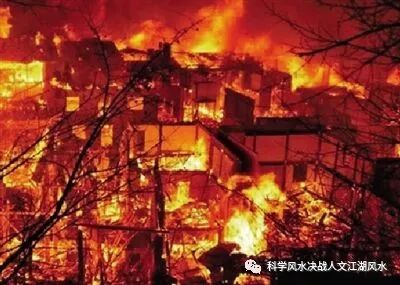
At two in the afternoon on 15 November 2010, a high-rise apartment block on Jiaozhou Road in Shanghai caught fire. Many of the residents were retired teachers. The fire began between the tenth and twelfth floors; the whole building was soon wrapped in it, and many residents had not got out. By ten-twenty on the morning of the nineteenth, fifty-eight people had died and more than seventy were still in treatment.
The cause was traced to an unlicensed welder working in violation of regulations. Four suspects were detained. Behind that, the renovation had been subcontracted repeatedly in breach of the rules; the site was chaotically managed and there had plainly been a rush to finish; large quantities of nylon netting and polyurethane foam, both highly flammable, had been used where they should not have been; and supervision by the responsible authorities had been inadequate.
I want to look at only one aspect of it: from the standpoint of the traditional Chinese study of fate, how does a thing like this happen to so many people at once?
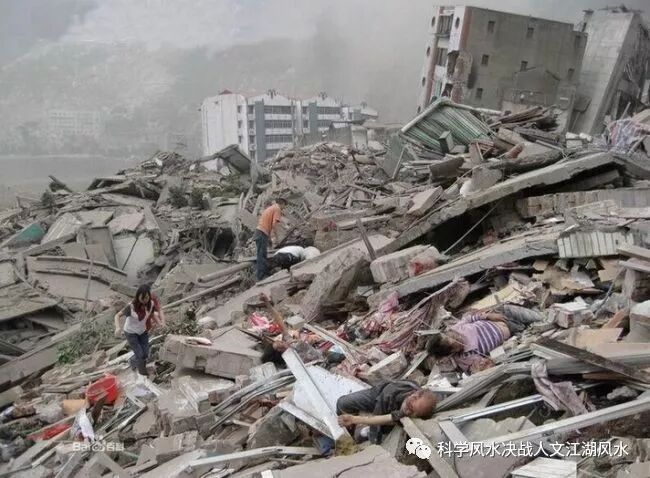
Collective disaster means two or more people meeting disaster at the same time in the same place.
The natural objection: their birth times differ, their environments differ, their feng shui differs. Why should they meet disaster together?
1. The greenhouse
In a remote mountain village an old farmer planted leeks, cucumber, aubergine and scallion in his greenhouse, meaning to sell them at a good price before the Spring Festival. Half a month before they were to go to market, a blizzard destroyed the greenhouse. Apart from part of the scallion, the leeks, cucumbers and aubergines were frozen dead. The old man's hope collapsed with them, and he was grief-stricken.
Now: each vegetable in that greenhouse had its own pattern of growth — its own fate-tendency. Predicted in the normal way, none of them should have died half a month before market. What intervened was a sudden storm carrying enormous energy, which in a moment destroyed nearly all of them, each with its own separate pattern of growth.
The lesson is that individual fates are contained inside the fate of the whole. Only while the whole is not subjected to a sudden information-field of enormous energy can the several individual fates run along their normal tracks. This is the dialectic of whole and part: a personal fate is affected by the fate of the group.
In feudal society the collective fate was poor. Even the emperor, whose individual fate was the best available, could not have flown in an aeroplane — the thing did not exist. Collective fate in the present day has advanced a great deal, and so a person whose individual fate is not the best, or is even rather poor, can still sit in an aeroplane. That is proof enough that an individual fate is built on the foundation of the collective one.
And if that foundation is suddenly withdrawn, the individual fate becomes unpredictable. In the Tangshan earthquake, in the atomic bombings of Hiroshima and Nagasaki, hundreds of thousands of people met disaster at the same moment — because the foundation of collective fate was suddenly gone. Which is why individual fates became unpredictable there, and why each one departed completely from the track it should have held.
2. Even then, they differ
And yet, even when the energy of collective fate has overrun the energy of individual fates, the individual outcomes differ enormously.
In the greenhouse, some plants froze; the scallion did not — though even the scallion took some damage. In Tangshan, in Hiroshima and Nagasaki, hundreds of thousands met disaster together, but no two met the same disaster. Some suffered greatly, some slightly, some hardly at all. That spread comes from the difference in the quantity and the form of the energy each person carries.
By the same logic, even among those who all died in a collective disaster, no two died the same way or felt the same thing in dying.
So: individual fate rests on collective fate, and upon that foundation the differences in each person's quantity and form of fate-energy produce the endless variety of one life against another.
3. The price of a flat
Property prices across the country are climbing fast. That climb is the collective fate of everyone buying. But the pressure it puts on each buyer differs wildly with income. Whether a square metre costs thirty thousand or fifty thousand makes no difference at all to a billionaire; to an ordinary salaried worker it is an enormous difference. That difference in pressure is exactly what individual fate looks like when it is standing on collective fate.
The same holds for the fire. The hundreds of people in that building had different birth times and different environments; judged as individual fates, they should not have met disaster together. But the collective fortune of the building itself changed — it caught fire — and each individual fate was carried along by it.
That is the dialectical relation between the fate of the whole and the fate of the person.
Source:WeChat public account “Shikongren Coordinates” (时空坐标) · by Lü Wenyi
Chinese original:为什么130多人同时遇难?
Notice:This is a study archive. Copyright remains with the author. Nothing here constitutes advice.