The Core Secret of Seeking the Dragon and Setting the Point (Part 1)
Translator's note. Part one of the argument that carries the whole practice layer. Lü's method here is analogy, and the analogies are unusually good: a dragon point is where you sink a well, not where the well looks pretty; the surrounding hills and streams are the scenery around the well, not the aquifer. From that he derives the claim that the trade's entire surface vocabulary — embrace, orientation, date — describes decoration rather than supply. The passage on Yang Yun song and Liao Yu is worth reading closely: he is criticising them while insisting their standing is not in question.
When people hear “dragon point” they think at once of the traditional sequence: seek the dragon, set the point, examine the sand, find the water, fix the orientation, choose the day and hour. Yes — by “dragon point” I mean the place where the vein's energy can actually be used.
A “dragon vein” is a mountain range, or a water course. “Vein qi” is the energy stored in that range or course. A “true dragon point” is that one place — that one point — where the energy stored in the range can be fully controlled and used by us.
Take a homely comparison. There is water in the strata; but the question of where to sink a well so that the groundwater can be controlled and used most effectively — that place is like the dragon point. Energy flows everywhere in the human body; only at an acupuncture point can the energy moving through the body be controlled and used most effectively — and that point on the meridian is the equivalent of a dragon point on a dragon vein.
“Sand and water” are merely the things around the dragon point, like the objects around a well. Whether a dragon point exists is not decided by sand and water; it is decided by the structure of the dragon's strata — its landform. Whether water exists is not decided by what stands around the well; it is decided by whether there is an aquifer down there. Whether an acupuncture point exists is decided by whether a meridian passes there, not by the arrangement of muscle and tissue.
Where can you drill water? Where can you drill oil? Gas? Where can you dig coal? Where can you dig iron ore? Where can you build a large reservoir? The decisive factor is not the sand and water on the surface. It is the structure of the strata. Dispense with strata and judge only by surface sand and water, and every place in the country could produce water, oil, gas, coal, iron ore and reservoirs — because if you look only at surface combinations of sand and water, every place looks much the same, in the way that every place has some configuration of “hills around, water embracing.”
But the facts? Facts defeat rhetoric. All real energy is decided by the structure of the strata. Without a stratum that stores energy, no matter how fine the surface arrangement of sand and water, you will absolutely never strike water, oil or gas there. Which is to say: the core theory of feng shui is seeking the dragon and setting the point. Only by finding the true dragon point can we change our fate at the root; only by finding the true dragon point can we draw water, oil, gas, coal, iron ore without end. And to find it, one must — only must — understand the theory of strata structure and the accumulation of energy in strata: the theory of the focal point.
Relying on surface observation of the dragon's “form, stripping, escort” and on “hills around, water embracing, sand and water affectionate” to find a true dragon point is, in truth, harder than climbing to heaven.
Even the old masters — Yang Yun song, Liao Yu and the rest — could not guarantee that the points they chose by their experience of form and embrace were true dragon points. A thousand years of fact have settled it: if they could have guaranteed it, their own descendants would not still be geomancers, or poor, or in some cases without heirs. I am not denying the greatness of their contribution to Chinese culture. I am saying only that the age they lived in had no theory of strata structure and energy accumulation, and so they could do no more than explain the theory of vein qi and the dragon point through the visible surface — the dragon's form, its stripping and escort, the embrace of sand and water. Their spirit of inquiry, their practical experience, their philosophical thinking about feng shui laid a solid foundation for those of us who came later. Their standing in the field is not in question.
But the stars turn and time changes. Every science moves forward and approaches the final truth, and feng shui, being a science, is no exception. After several thousand years, as human understanding of landform has moved from the surface to the interior of the strata, feng shui ought likewise to move from studying the surface of landform to studying what lies inside the ground — toward something more objective, more scientific, closer to the actual truth of the subject.
Chinese medicine developed over several thousand years. If it had stopped at the surface diagnostics of looking, listening, questioning and pulse-taking, and never used the CT scan, the X-ray, the MRI, the ultrasound, the laboratory test, it could never have determined accurately where a tumour is or how large it is; it would not even know where in the body the heart, liver, spleen, lungs and kidneys actually sit. Chinese medicine advanced because it took up new science and new discovery, and its power to cure rose enormously. Feng shui is the same. If it stays at observing and applying the surface phenomena of landform, and cannot use new science to dissect what lies beneath, then “seeking the dragon and setting the point” will remain forever an empty theory with no reliability and no practical value.
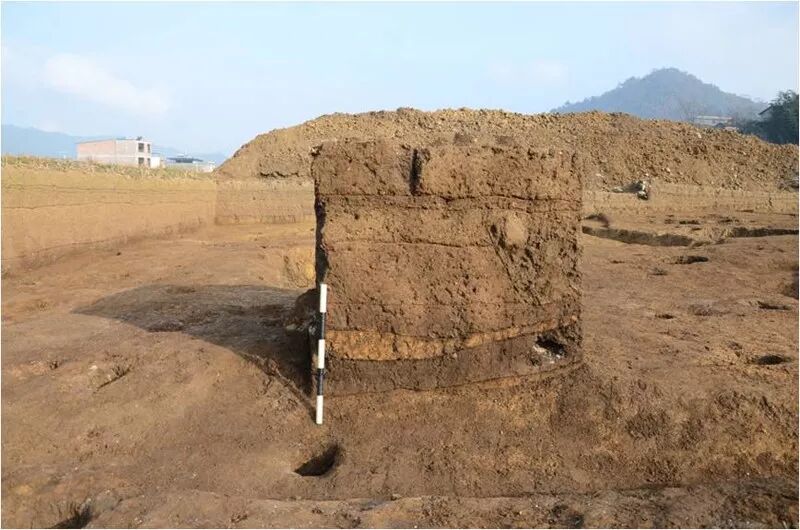
Once we can see the internal structure of the landform, we have found the location of the dragon's vein qi, and using that vein to set a point and change a person's fate becomes a hundred per cent precise. Decoding the secret of the true dragon point through the theory of strata structure and energy accumulation is then no more difficult than turning over a hand.
But for several thousand years we have not done this. We have only “copied the ancients' books and recited the ancients' examinations.” We have not kept pace with the times, nor pushed our inquiry into the essential truth of the subject any further. Instead we ring endless changes on the old texts — new bottles, old wine — summoning spirits and ghosts, cheating the world, stealing reputations, swindling money. Which is how feng shui came to be regarded as superstition and as a con, and that is a miserable position to be in.
To decode the essential truth of feng shui with the findings of modern science is the inescapable duty of our generation. If we go on selling new bottles of old wine, we will be the criminals of the age. The essence of the old texts we must absorb without false modesty; the errors of the old texts we must discard without hesitation. Only so can we travel light. Only so can we carry forward and develop the theory of the dragon point that Yang, Liao and the others discovered at such cost — and be worthy of the masters who lie underground. Otherwise we shall be ashamed before them, and have no face to make money from their theory.
By now friends should see: among the six items — dragon, point, sand, water, orientation, date — seeking the dragon and setting the point are the soul. And the root of seeking the dragon and setting the point is not the dragon's form and the embrace of sand and water. It is strata structure and the accumulation of energy in strata: where the focal point is.
With that theory alone, and no appeal at all to form and embrace, we can accurately explain every one of the world's hard cases. A site with hills around and water embracing, affectionate in every particular, that produces no wealth, no rank, and no descendants. A site where the sand flies and the water runs away, where sand and water turn their backs, that produces great wealth, high rank and a hundred years of life. A dragon of the five defective kinds — bare, broken, isolated, merely passing through, or all rock — that produces ministers and generals and a hall full of grandchildren. A site where one man rises to minister and every other relative dies young. A site where one man rises while the rest of the family are poor, mean and die badly. A site where one man reaches the throne while his relatives are utterly unknown.
With that theory alone we can, in a village or an apartment block that produced a minister, identify precisely the house in which that man's mother spent most of her ten months of pregnancy. In a cemetery crowded like a forest, with no external marker of any kind, we can find the exact ancestral grave of the man who rose to minister. In a graveyard of unmarked mounds we can find the grave of the direct ancestor after whose burial a particular person's fate changed fundamentally. In a village or a block we can find the house of the one person whose fate changed after settling there. None of this, and none of these explanations, is possible on the theory of form and embrace.
Survey the imperial tombs of the Tang, Song, Ming and Qing, and you will understand why a “true dragon point” with hills around, water embracing and every liqi rule correctly applied produced emperors who died young and ruined the state. Which proves: the root of the dragon point is strata structure and energy accumulation — where the focal point is. The form and the embrace are only a surface phenomenon of the dragon point. Only in the strata, only at the focal point, is there inexhaustible, endless energy; only with that energy can our fate be changed at the root.
Why can the dragon point change our fate at the root, while sand, water, orientation and date cannot?
Because the dragon point's energy is powerful and inexhaustible, while sand, water, orientation and date cause only a slight fluctuation in it. Without a true dragon point, no configuration of sand, water, orientation and date will give you a powerful, inexhaustible supply. With a true dragon point, you get that supply even with no configuration at all.
Some masters say that without the protection of sand and water the energy of a true dragon point will be blown apart by the wind. To which I say only: as long as the water keeps coming, the wind blows away a portion and does not affect your use of the water in the least. If no water comes at all, what does it matter that the wind does not blow it away? You would rather have the water and the wind. Of course it is better still if the water is sheltered and not blown away. But the essential thing is to understand which factor matters and which does not, which is principal and which secondary. A man who cannot tell principal from secondary, and talks at random, is no feng shui master.
Energy is the root of fate. To change a person's fate you must obtain great energy, and only great energy changes a fate at the root.
A homely illustration. A person already born is a car that has left the factory: its quality and performance are already fixed. If you want to improve that quality and performance fundamentally, there is one effective way — rebuild it. If you only service it, maintain it and swap parts, its quality and performance will not change fundamentally. Rebuilding the car is like using the inexhaustible energy of a dragon point to change a person; servicing and swapping parts is like adjusting the sand and water around a point, or changing the orientation and the date. Only sufficient energy changes a fate at the root, and only a true dragon point supplies it.
Once a person has the power of a true dragon point, his fate changes at the root: poor to rich, small wealth to middling, middling to great; mean to honoured, small honour to middling, middling to great. But understand this: however much energy a person already born obtains from a true dragon point, he cannot cross more than two grades above the innate level that the feng shui of his birth environment had already fixed. A car built as a car cannot be rebuilt into an aeroplane; but it can be rebuilt into a car of one or two grades better quality. For a person not yet born, the energy at the true dragon point sets at least the floor of the wealth and rank he will have after birth. A true dragon point can be used for a grave, and equally for a dwelling. Either way it changes, at the root and most effectively, the fate of the descendants of the buried and of those who live on the spot.
A scientific theory of the true dragon point should be spread widely, for the benefit of all. Students of feng shui should be able to answer the contempt and misunderstanding of every layer of society by changing their own fate first. Only when a master has improved his own fate will others believe in his real level, and believe he is capable of improving theirs. If the geomancer himself is begging in the street, how can anyone believe he has the ability to change another man's fate?
Using a true dragon point, we can change our fate at the root and most effectively. Without one, every method of changing fate is still effective, but only on the surface and to a small degree: an up-and-down fluctuation within the same level of fate. Only the true dragon point lifts us onto a higher level, and so achieves a thorough change.
In one sentence: the value of the true dragon point is that it changes our fate at the root and lifts us into a higher level of fate.
Source:WeChat public account “Shikongren Coordinates” (时空坐标) · by Lü Wenyi
Chinese original:寻龙点穴的核心秘密是什么?(一)
Notice:This is a study archive. Copyright remains with the author. Nothing here constitutes advice.