What Is a Feng Shui Master Actually Looking For?
Translator's note. The companion piece to the previous essay, written the next day. If “what is feng shui” is the definition, this is the hunt: what exactly is a practitioner walking a hillside looking for? The answer — an energy the classics call shengqi (生气, living qi), which Lü renames “life's primordial motive energy” — is argued through an unusually wide set of examples, from stem cells to the growth rate of rice. It also contains one of the few genuinely funny passages in the collection: a reporter from Zibo Daily asks a master what feng shui is, is told “genes,” and the master is arrested the same afternoon.
Whether it is traditional feng shui or natural-science feng shui, when we seek the dragon, set the point and read a site — what are we actually looking for? Reading feng shui is not simply checking whether a place has mountains around it and water at its breast. It is not looking at the dragon sand and the tiger sand. It is not, in the end, about setting an orientation and choosing a fenjin.
Guo Pu's Zangshu says: “To bury is to store; it is to ride the living qi.” In other words, we are looking for something called shengqi — living qi — also called earth qi (diqi).
So what is living qi? In truth the ancients never worked it out. They simply believed that such a thing as “living qi” existed. It is not a magnetic field. It is not wind. It is not water. Nor is it microwaves, electromagnetic waves, ultrasound, infrasound, or any of the other things people say it is.
Many people, wanting to prove that feng shui is scientific, dress it up in the vocabulary of modern science. The dressing is transparently forced. If feng shui were ultrasound, we could put an ultrasound machine in the living room and be promoted and enriched. If it were a magnetic field, we could manufacture electromagnets and have it on tap. If it were the movement of air, we could buy a few electric fans, arrange them in a bagua formation around the room, sit in the middle and prosper. All of this is the same strained talk, produced by people who want to seem learned and want feng shui to look like science.
There was a master in Guangxi called Gong Daocheng who used to say that the human body carries eight kinds of magnetic field, and that he could change the type of a client's field by adjusting the feng shui, and that the reason a person has bad luck is that somewhere in his body the field is wrong. Modern science has never said there are eight kinds of magnetic field. His “eight fields” are simply the eight directions. It is pure invention.
A master in Zibo, Shandong — Han, let us call him — wrote books on predicting the stock market, books on predicting the lottery, and books on feng shui. A reporter from the Zibo Daily went to him undercover and asked what feng shui is. He said: feng shui is genes. The reporter asked what feng shui has to do with genes. He said the reporter was uncultured and would not understand the explanation anyway. It was not that the reporter could not follow the explanation; it was that the master's own education did not run deep enough for him to explain what a gene is. Many masters today believe that a handful of scientific terms will overawe anyone. In a modern scientific society there are plenty of well-informed people; it is only that few of them bother to use what they know to interpret feng shui theory. The reporter went away and published a piece headlined “Feng Shui Master Makes Wild Claim That Feng Shui Is Genes” in the Zibo Daily. That same day the master was dealt with by the public security bureau.
There is nothing wrong with interpreting feng shui through scientific knowledge — it is a sound approach and a good way to spread the subject. But do not talk nonsense. “The body has eight magnetic fields,” “feng shui is genes,” “feng shui is all kinds of waves” — this is nonsense, because it does not survive strict logical examination.
So what is living qi? We can characterise it as a form of energy. All energy flows; there is no energy at rest. Air in motion forms wind, which generates electricity; water in motion forms hydropower. The motion of matter is absolute and rest is relative. All motion of matter follows laws, and has its own modes and tracks. Modern science has established that, because of gravity, the flow of energy on earth follows one rule: from above to below, from high to low. Only when we know how energy moves on earth can we know where to look for this living qi.
We can also, rationally, use modern scientific knowledge to think about what this energy actually is, and give it a precise reading: life's primordial motive energy.
Our ancestors had in fact noticed the same thing. It was only that science and technology were undeveloped in their time, natural science was still a seedling, and their reading of living qi belonged to a plain materialism. They called this “energy of the primordial motive force of life” the chonghe zhi qi — the qi of harmony and balance — meaning energy in which yin and yang are fused one hundred per cent. Solitary yin does not generate; solitary yang does not grow. Only the harmonised yin–yang qi is energy that can be used.
In modern terms, we can understand “life's primordial motive energy” as effective energy which can turn into whatever it needs to turn into. Think of the stem cells in human bone marrow. To a medical scientist they are rather like what we are describing: stem cells have the property that, according to the body's needs, they can be cultured into the cells of any organ. A lung cell cannot become a liver cell, and a lung cell cannot become a brain cell; but a bone-marrow stem cell can become a lung cell, a liver cell, a brain cell, and so on, as the body requires. A stem cell is not in the absolute sense “life's primordial motive energy,” but it is close to it in a degree. So the harmonised yin–yang qi is life's primordial motive energy.
Then what, concretely, is this “life's primordial motive energy”?
The Big Bang theory holds that the universe formed when a dense, incandescent singularity exploded and expanded 13.7 billion years ago. It is the most influential account in modern cosmology. Hawking held that after the Big Bang countless particles were produced, filling the whole universe. He called them subatomic particles. In theory these subatomic particles are evenly arranged. But because there exists in the universe a force that might be called “the primordial motive force of life,” certain particles break formation, recombine and rearrange, and in doing so form the sun, moon and stars, and everything on earth — mountains, rivers, plants, animals, and us.
Every one of us is also made of these subatomic particles. In essence, the material composition of a human being and of all things is the same. From the standpoint of modern particle physics there is no essential difference between a man and a cow. This is also what Buddhism means by Buddha-nature: to realise Buddha-nature is to be able to return to that subatomic state. The reason Sun Wukong could transform was that the subatomic particles in his body could recombine freely — but not entirely freely; only some of them could, which is why his transformations were numbered, seventy-two of them, and not whatever he pleased. Erlang Shen's particles recombined a little more freely, so he had seventy-three. At the level of the Buddha, Shakyamuni could turn a single hand into a universe that Sun Wukong could not jump out of. For Daoists who cultivated themselves into immortals, transformation was likewise possible, and the basis of it was control over the subatomic particles in the body, recombining them according to intention.
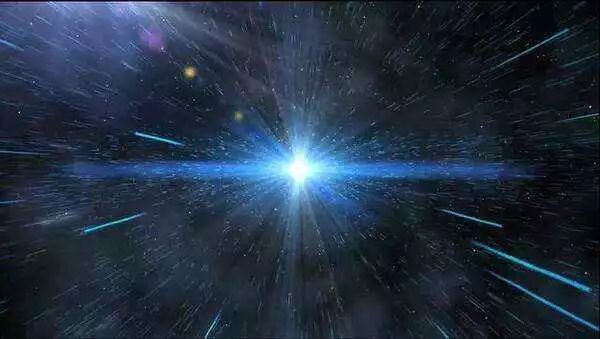
As the universe evolved, the earth came to be; as life on earth evolved, we humans came to be. So why are we alive? What actually sustains a human life? Medical scientists say we are alive because we take in nourishment, because our bodies contain protein, calcium, iron, zinc and vitamins. But then a problem arises. Do people who die in accidents or of illness necessarily have an imbalance of calcium, iron and zinc? Go and test a very old man who dies at ninety — his vitamins may be more normal than those of a twenty-year-old, and yet he dies. Which is to say that our living system is not sustained by trace elements, not by protein, not by calories. It is sustained by this “life's primordial motive energy.” The more of that energy your body obtains, in a mode of action matching the primordial motive energy already in you, the more your undertakings will move toward success, and the more your wishes will come true.
As for why we eat, drink and breathe: our life is not sustained by the food as such. It is that this primordial motive energy exists in air, water, plants and animals. We stay alive on these things not because of calcium, iron, zinc or protein, but because the food contains the primordial motive energy that the living system requires. Ginseng grown for a thousand years works better than ginseng grown for one year, and from antiquity to the present nobody has been able to explain why. If you take a modern scientific instrument and analyse the two by physical and chemical methods, their composition is identical. So why the difference? Because a ginseng root that can live a thousand years is telling you that its own energy is great; if it had no energy it would have died. In the past, northerners lived longer on average than southerners, and were much stronger physically. With no weapons, one northerner could take on three Vietnamese, because the Vietnamese live in the south. Why is southern vitality less tenacious? It has to do with what people eat. Southerners eat aquatic products and rice, which have short growing seasons; northerners eat pigs, cattle and sheep, and grain crops, which have long ones. The longer a plant or animal takes to grow, the more primordial motive energy it accumulates in the process. In modern society the difference has blurred: food moves in both directions, and through intermarriage many southerners now carry northern genes.
Since this primordial motive energy is what sustains us, where is it? It is in the food we eat, the water we drink, the air we breathe, and throughout the universe. As the earth revolves and rotates, gravity draws large quantities of this energy from space onto the earth's surface. Once it lands, it must move according to the earth's rules — which means it must have a mode of gathering. Where does it gather? In theory, in low places. The trouble is that low places hold water, and energy that lands in water flows away with the water. Water does not gather energy; water moves, and energy in water is chaotic and cannot accumulate.
If this energy is really to gather, it can only be in the earth's solid matter, not in water. Only the material of the ground is relatively at rest. High mountains and broad land are where the most of this energy collects. This is why traditional feng shui insists that the water in the bright hall must gather — “if the water does not gather, wealth does not gather.” Only when water is held does the energy stop and slowly accumulate; if the water runs, the energy runs with it and we cannot obtain it. So the requirement that water gather has a scientific basis. What we are looking for is this primordial motive energy.
Someone may object: we are made of subatomic particles, we already carry the primordial motive force inside us, so why look for it outside? Because we arrive with only what we accumulated in the womb — a very small amount. A person who brings a great deal of this energy from the womb will have a large fate, high office, much wealth, a good marriage and good children. But the amount anyone brings from the mother is limited, and it must be continually replenished afterwards.
Water and air affect people most, because this energy is distributed evenly through them, and so their effect on each person is the same. Precisely for that reason a person cannot concentrate it. Dissolve a lump of sugar in a barrel of water and no one can swallow the whole lump at once.
This energy will collect in soil — but some soils collect more and some less. Choosing a site means finding the place, on the surface or beneath it, where this energy gathers most, and putting it to use. That is the root of site selection. If we build a house where this energy gathers, we will draw more of it, and our wishes will come true.
The law of the universe is that whatever has more energy controls whatever has less. There is no absolute equality in this world; if there were, there would be no point pursuing it. Because there is inequality, we go on pursuing equality. The world is unfair: the earth is more massive than the moon, so the moon goes around the earth; the sun is more massive than the earth, so the earth goes around the sun; the centre of the galaxy is more massive than the solar system, so the solar system goes around it. The animal world is the same: the weaker lion submits to the stronger. Human society is the same: in an army, the man with the best military skills will end up leading, and a man who cannot shoot straight or fight hand to hand will not. A person with great energy can control others; a person with little energy cannot. The more people your energy can control, the greater your achievement. It is not about being big and tall — what matters is how much primordial motive energy is actually in your body. If there is very little, there is no question of wealth or rank at all.
Reading feng shui, then, means looking for the place on the surface or in the strata where this primordial motive energy gathers most. We may call that energy living qi, or earth qi. And where exactly does it gather? Everything in feng shui — dragon, point, sand, water, orientation, date selection — is an attempt at that question. So first understand what we are looking for when we read a site: what it is we are hunting as we run over hill and valley.
Source:WeChat public account “Shikongren Coordinates” (时空坐标) · by Lü Wenyi
Chinese original:看风水到底在寻找什么?
Notice:This is a study archive. Copyright remains with the author. Nothing here constitutes advice.