The Twenty-Four Sand Burial Methods, in Photographs
Translator's note. Twenty-four named ways of placing a coffin, each keyed to the shape of the point-star. The names are mostly pictures — drawing a bow, leading two oxen, shouldering an open umbrella, carrying a saddle — and the translation keeps the image because the image is the instruction. This is the traditional vocabulary at its most concrete, and it is worth comparing with the two essays on the taiji halo already in this collection: the same field, described from the ground rather than from the theory. Many of these methods require tunnelling in from the side rather than digging straight down, a point that matters in practice and is easy to miss. The author's opening note that he gives only a thumbnail reading of each photograph, reserving detail for his classes, has been kept, since it explains the compression.
The twenty-four sand burial methods are a way of setting the point that takes the shape of the point-star as its standard.
(The original notes here that plagiarism is rampant in the trade, that the author's articles have been copied widely, and that in consequence the readings of the photographs below are deliberately compressed — enough to make the point, not enough to teach the method. The full detail is reserved for his face-to-face classes.)
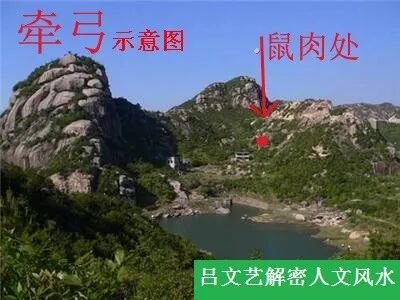
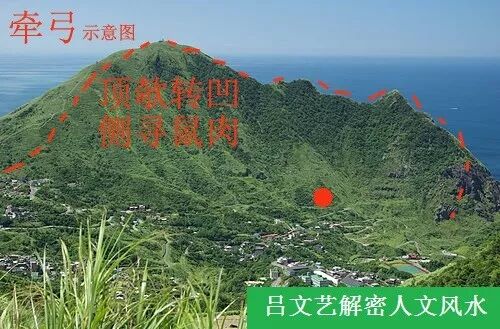
1. Drawing the bow (牽弓). The summit of the incoming dragon tilts over toward the saddle on one side, in the posture of a man drawing a bow with both hands. The point goes at the “rat flesh” — a descriptive term: when you draw a bow hard, the pectoral muscle swells up like a rat lying there. That is also where the strength is concentrated, and it is what decides whether the arrow flies.
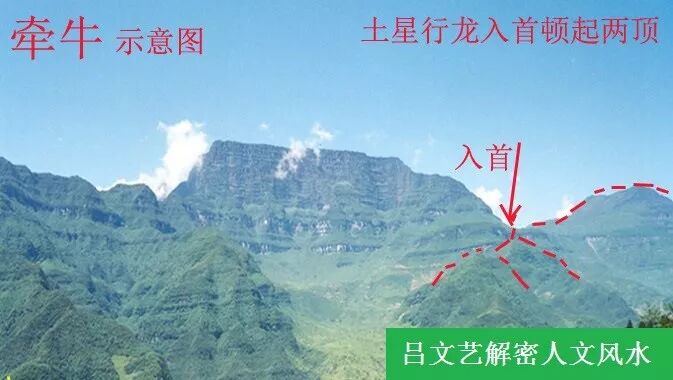
2. Leading the ox (牽牛). An earth-form mountain runs as the dragon, and at the point of entry two metal-form hills rise suddenly. The parent mountain is earth-shaped; at the entry two metal hills appear; the point is set on the metal hills. It looks like a man leading two oxen at once.
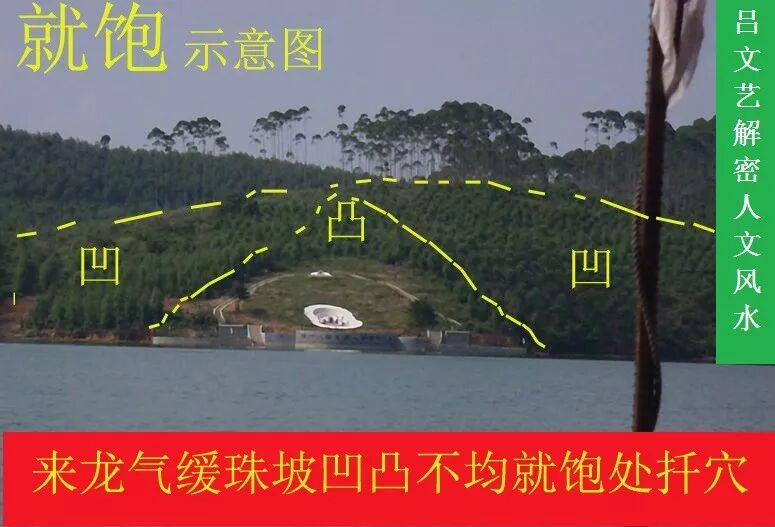
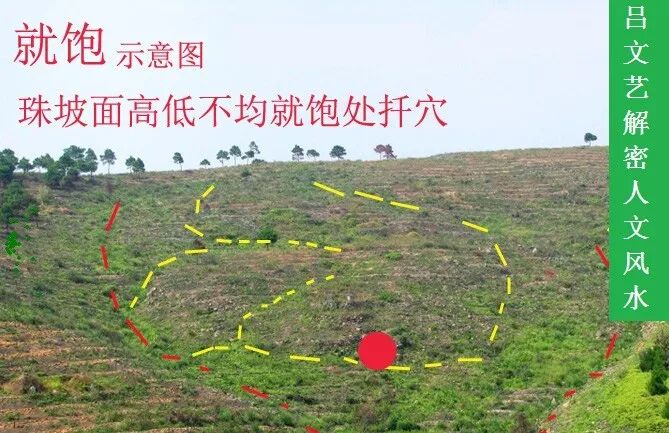
3. Going to the full (就飽). Jiu means to draw near; bao means the place where the vein energy is most concentrated. The incoming vein is slow, and although you have a point like a piece of jewellery, the slope is uneven — so set the coffin at the fullest part.
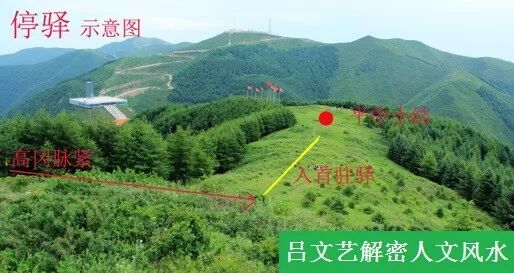
4. The post station (停驛). Ting means to stop; yi is the ancient relay station, and here means the place where the vein energy collects. The qi comes fast along a high ridge; a small knot forms below on flat ground, and at the entry there is a place where the carts and horses halt.
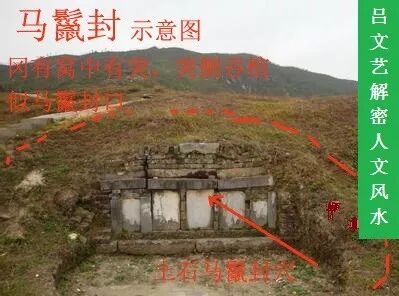
5. Horse-mane burial (馬鬣封). Lie is the long hair on the neck of certain animals. On the high ridge there is a hollow, and within the hollow a mound. Do not dig a pit on top of the mound; tunnel in from the side of the mound, slide the coffin in, and seal the mouth with earth — the way a horse's mane falls over to one side and closes a wound on its neck.
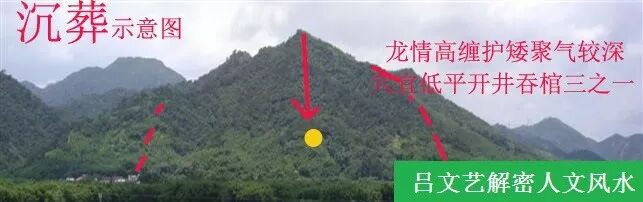
6. Sunken burial (沉葬). The point-star is high and the dragon and tiger sands are low. Bury the coffin low, keeping it level with the dragon and tiger sands.
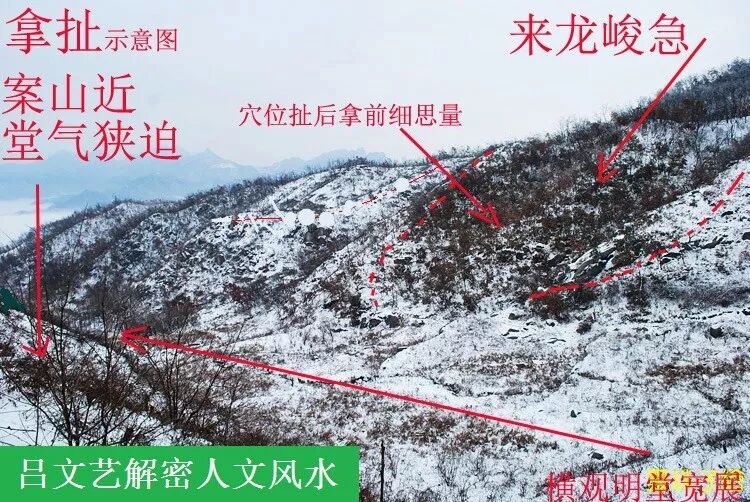
7. Grasping and pulling (拿扯). The incoming dragon is steep and urgent, the bright hall narrow and long, the table mountain close. By observation and thought, find the place of greatest energy within the arena and place the coffin there, with its height gauged against the table mountain.
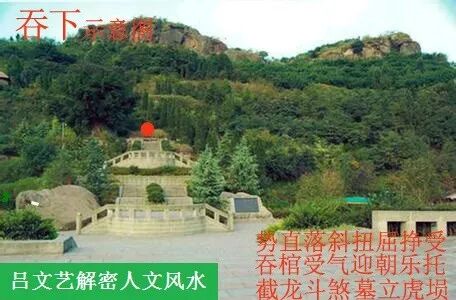
8. Swallowing down (吞下). The dragon falls straight and steep, twisting and wrenching as it takes the blow. The method is to swallow the point in and open the shaft below; the point's disposition is high, with the intent of fighting the sha.
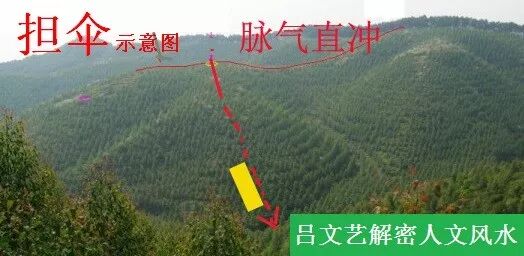
9. Shouldering an umbrella (擔傘). The vein's qi rushes straight down. Bury the coffin beside the qi line, not on top of it. The metal-form hill is shaped like an open umbrella and the qi line is the handle; the coffin steps aside from the handle, the way a man carries an open umbrella on his shoulder.
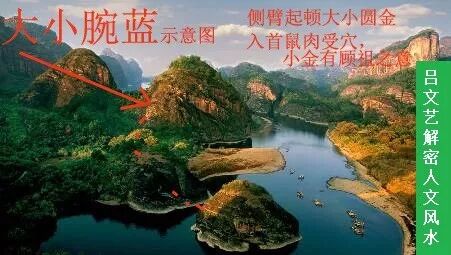
10. Two baskets on the arm (大小腕藍). Wan is written wan (剜) in the old books. When the dragon arrives, two metal-form hills of different size extend from a side arm. If they are not metal-form, it is not a true dragon point. Set the point where the energy gathers at the entry. The smaller metal hill has the look of a dragon turning back to regard its ancestor. The landform resembles a man with two bamboo baskets hanging from his arm.
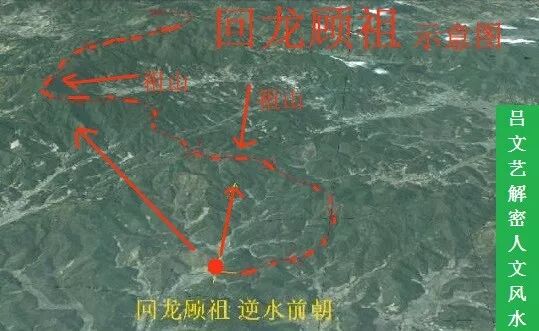
11. The returning dragon regards its ancestor (回龍顧祖). The dragon comes on steep and hard; after crossing the gorge it turns around, opens its face and knots, looking back toward its source.
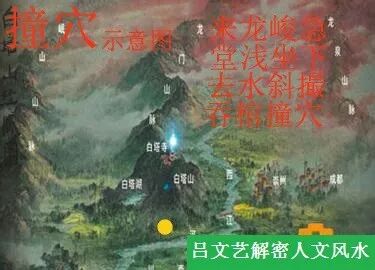
12. Bumping the point (撞穴). The dragon is steep; standing below, the bright hall is shallow and small, and the departing water crosses at an angle. Tunnel in and insert the coffin so that its side faces the qi — never with the head of the coffin toward the qi.
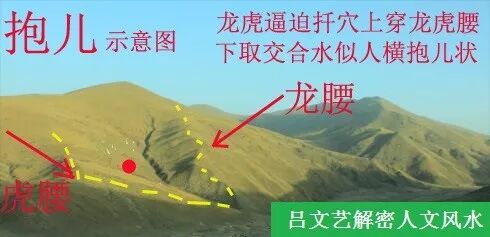
13. Holding the child (抱兒). Steep above, gentle below, with the dragon and tiger sands pressing in. First find the waists of the dragon and tiger; then look at how the waters join, and whether the dragon sand wraps the tiger or the tiger wraps the dragon. Only a bent arm can hold a child, so set the point in the bend of the dragon or tiger sand.
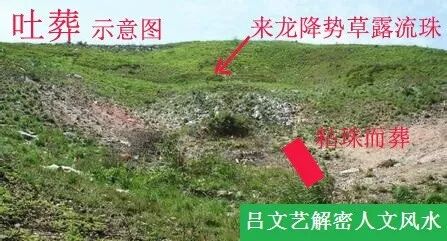
14. Spitting burial (吐葬). The dragon descends, and a mound inside a hollow knots like a dewdrop about to fall from a blade of grass. This is called “spitting breath.” If the dewdrop is broken, the qi does not gather — so you can only set the point sticking to the pearl.
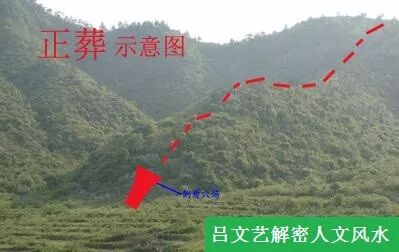
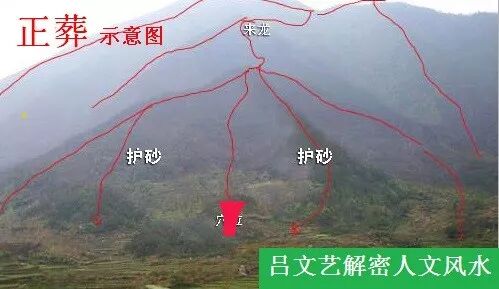
15. Straight burial (正葬). The dragon is neither urgent nor slow, its escort is neat, and the coffin receives the vein's qi head-on.
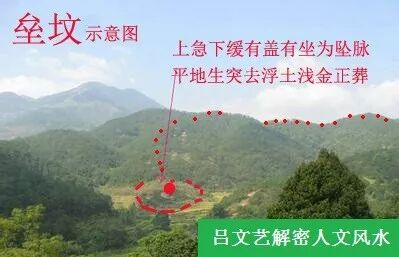
16. Piled grave (壘墳). The dragon has both a cover and a seat: steep above, gentle below, a single mound rising on flat ground, and stone within the mound. Skim off the loose soil, cut the shaft shallow, bury straight, and then pile the earth up into a grave.
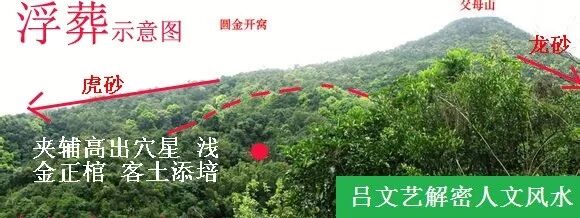
17. Floating burial (浮葬). Fu means toward the top, brought up high. The green dragon and white tiger are high and the point-star is low; bury the coffin high, because the low ground carries too much yin qi.
18. Opening up (打開). The mound is tall, broad and full. Dig a deep pit on top of it, build four pillars inside the pit, and suspend the coffin.
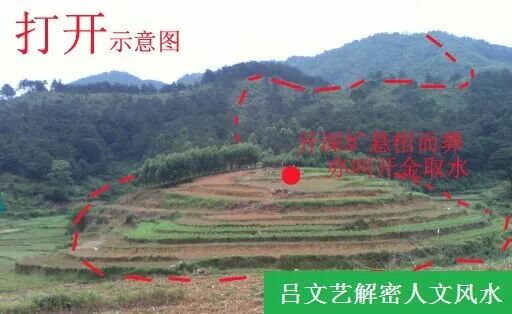
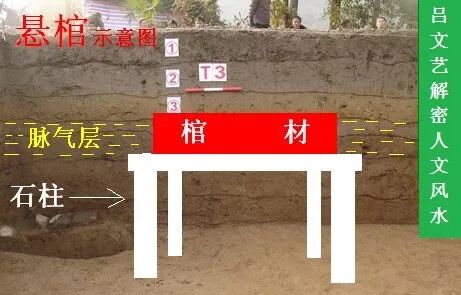
19. Hanging coffin (懸棺). The vein's qi is urgent rather than slow. Although the sand and water at the knot are perfect, the knot lies deep below. Dig a deep pit, line it with brick or stone into a large chamber, set four stone pillars upright inside it, and rest the coffin on the pillars. The height of the coffin matches the height of the qi.
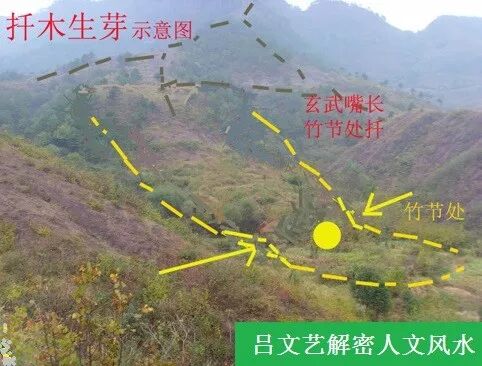
20. Cutting the wood to make it sprout (扦木生芽). The dragon drops its vein like a long straight tree trunk — what is also called a long black-tortoise beak. In such a place, even if every corroborating sign says the site is auspicious, you must never set the point at the very end of the vein, head-on; that would ruin the line. But along this long straight trunk there will be a node, like the joint of a bamboo, and at the thick part of that node you can open a shaft and place the coffin — enough to pick up three-tenths of the prosperity. It works like grafting a tree, which is why it is called cutting the wood to make it sprout. Bring in earth from elsewhere, pack it firm, and make the grave neat.
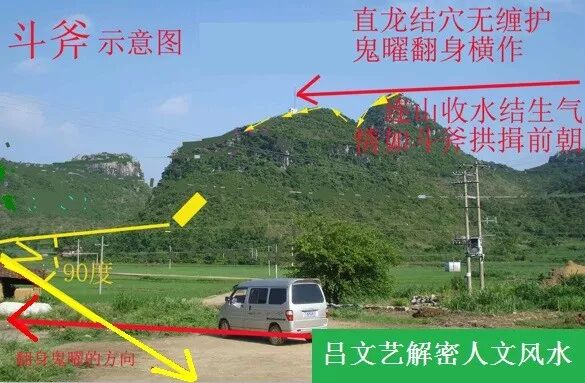
21. Fighting the axe (鬥斧). A straight dragon knots, but with no dragon or tiger sands to wrap it. Instead the ghost and halo sands turn over and lie across as facing mountain and table mountain, and a bright hall forms, so that the point can receive the living qi. The look of it is the point-star of the straight dragon jammed into the socket where an axe head takes its handle. Because the dragon comes straight and the reception is sideways, it is called fighting the axe.
22. Wounded ridge (傷飢). Ji here means the ridge. After the dragon arrives there is a taiji halo in the open face, and the vein's qi runs down along the spine. The coffin must be placed hugging the spine line.
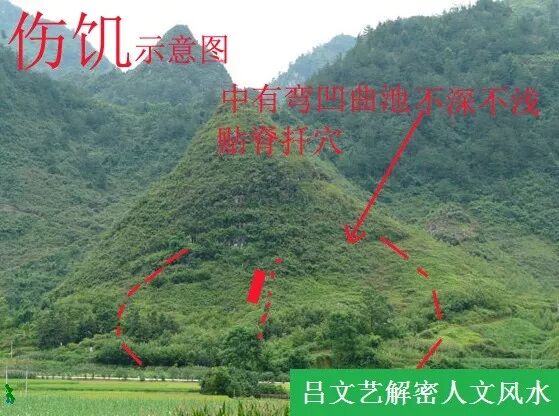
23. Carrying the saddle (擔凹). A horizontal dragon knots. Metal-form hills stand on either side, and the point is set in the middle, carried between the two metal hills.
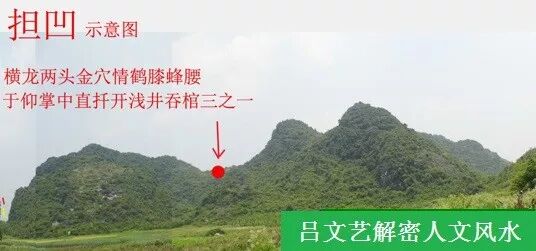
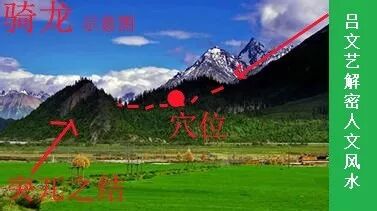
24. Riding the dragon (騎龍). The dragon reaches flat ground and does not stop; it goes on and raises a mound ahead. The table mountain crowds close on the point, so the point is exposed and cannot gather qi, while the rear dragon presses in behind. Withdraw to higher ground and set the point there.
Source:WeChat public account “Shikongren Coordinates” (时空坐标) · by Lü Wenyi
Chinese original:传统风水学之“二十四砂葬法”实地图片详解
Notice:This is a study archive. Copyright remains with the author. Nothing here constitutes advice.