The Zangshu of Guo Pu: Text, Meaning and a Scientific Reading
Translator's note. The closing piece of the practice layer, and the right one to end on: the founding text of the whole tradition, read through and then marked. Two things are worth knowing before you start. First, this is not a translation — the author paraphrases the Zangshu line by line in modern Chinese, and the English here follows his paraphrase, not Guo Pu's original, which is why the register is plainer than the fourth-century text. Second, the second half is a ten-point audit in which he accepts some of the classic and rejects the rest, most sharply the claim that qi stops at water. Read it as a working geomancer arguing with his own scripture.
The Zangshu — also called the Book of Burial — was written by the Eastern Jin scholar Guo Pu. It not only discusses feng shui and its importance but sets out concrete methods for reading a site, and it is the ancestor of Chinese feng shui culture and one of the great curious books of Chinese divination.
Many of the Zangshu's propositions are not necessarily correct. What follows is an exposition of its content, and does not represent either my endorsement or my rejection of them.
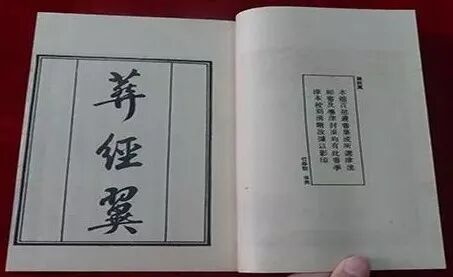
(For reasons of length the original text is not reproduced here.)
Burial is for the purpose of using the inexhaustible energy in the earth. The energy that flows in the earth becomes wind when it moves outside, clouds when it rises, rain when it descends; flowing within the earth it gives rise to all things.
Children are part of their parents' bodies. When the parents' bodies receive energy, it is passed to the children; and when the parents' bones are buried, they pass the earth's energy on to their descendants. When the copper mountain in the west collapses, the bronze bell in the east rings; when the plants outside grow in spring, the seeds indoors sprout. These are the proofs.
The energy in the earth flows along the lie of the mountains; when the range continues and then stops, the energy too gathers and stops. Energy is in the trunk of the range and in its branches; with the range it is everywhere. Blown by the wind without protection, it disperses; meeting water, it halts.
What we call feng shui is the method by which people use the energy that flows in the earth. The best feng shui is energy that halts on meeting water; the second best is storing the wind so that the energy is not blown away. For even along the main flow of the earth's energy, part of it will stop; and even away from the main flow, scattered energy will gather. So long as the earth's energy can be used, whether deep or shallow, the site may be called good. Earth is the root of energy — where there is earth there is energy. Energy is the root of water — where there is energy there is water. Hence at a high site the bright hall should be deep; at a flat site it should be shallow.
Energy flows following the form of the earth, and so gives rise to all things. A range that winds and is majestic, that turns and returns, where motion and stillness are in harmony, where yin and yang join, where the earth is thick and the water deep, where plants grow vigorously, where the form stops and the energy gathers — such a place brings forth all things, and is noble as a thousand chariots, rich as ten thousand in gold. It is a supreme site.
A point site values flatness; a range values change. Where the range begins to change, the energy begins to change; where the range's change ends, the energy stops and gathers. In the range's changes lies the way to use auspicious energy. Where the point has auspicious energy there must be a swelling of earth; where the range's change reaches the place where energy stops, there must be a river or a gully alongside. If the mountain's changes flow smoothly and return with affection, it is forever auspicious without misfortune. Where ridges are layered and the changes are hard to tell apart, see the small in the large and the large in the small. Where host and guest ridges cannot be distinguished, do not bury. Where the main ridge towers and the branches lie low, wherever the change halts there must be ground flat as the palm of a hand. Bury the main peak at the mountain's foot, and the branch ridges high. If the range changes abnormally, the earth's energy pours away. So burying a person is truly difficult, and observing the changes of ranges does indeed dazzle the eye and confuse the mind.
Whatever the changes, the orthodox method is to bury at the junction of ranges. In choosing the place, begin from the source of the range's changes and bury where the dragon stops. Examine whether the dragon is useful or not; take what is beneficial and avoid what is harmful. Ride it shallow, take it deep; open it to pass, close it to fix. Ride metal and face water — take from above and below; sink earth and seal wood — weigh left and right. Hide the eight winds outside; secrete the five phases within. Heaven's light descends, earth's virtue bears up; yin and yang are joined; the five soils are present and the four are complete — azure dragon, vermilion bird, white tiger, black tortoise. This is how the gentleman seizes the creation of heaven and earth to change fate. Skill of eye and depth of practice are the root of it: move toward completeness and avoid defect, raise the low and add to the high. The changes lie wholly in the mind, and by generalising from one case to the next the work may rival creation itself.
A good site: the range runs on in rise and fall like flowing water, like a galloping horse. It comes like a galloping horse and stops like a horse lying down. It is like a man clutching ten thousand treasures and not daring to breathe; like a man who has prepared a fine meal and bathed and fasted; like a bulging sack; like a vessel filled with things. Like a dragon, like a phoenix, now soaring, now coiling; like a bird crouching; like a hundred beasts squatting; like an emperor in his dignity, the bright hall open before him, all the hills attending, dragon and tiger embracing, host and guest greeting one another in order, the four animals upright and distinct. As for the five harms not coming near and the eleven incompletes — these are secondary matters.
There are five mountains that may not be buried. First, energy is useful by flowing and giving rise to things; a bare mountain's energy gives rise to nothing, so a bare mountain may not be buried. Second, energy flows along the range; a broken mountain has no flow, so a broken mountain may not be buried. Third, energy flows within the earth; a rocky mountain has no earth, so a rocky mountain may not be buried. Fourth, energy gathers where the mountain's force stops; a mountain merely passing through has no place where energy stays, so a passing mountain may not be buried. Fifth, energy gathers where ranges meet; an isolated mountain has no range to meet, so an isolated mountain may not be buried. The bare, the passing, the broken, the rocky and the isolated produce new dangers and consume the blessing already accumulated.
In reading a dragon, the force of the range is the hardest thing to judge, the form of the range next, and a single part of the range easier still.
A range whose force is like ten thousand horses descending from heaven is an imperial vein. Force like a towering wave, ridge upon ridge, is the vein of a general or a minister. Force like a descending dragon with water curling round and clouds following is ground for one of the three dukes. Force like layer upon layer of tall buildings with luxuriant plants is ground for a founding minister. Force like a startled snake fleeing, twisting and slanting, destroys state and family. Force like spears and halberds is ground for execution and imprisonment. Force like flowing water is treacherous ground.
Form like a man bearing a heavy load, with a towering ridge within the range — buried lawfully where the ridge stops, it is ground for a risen prince or marquis. Form like a swallow's nest: within the nest is ground for an enfeoffed vassal. Form like a wall set on its side, with a ridge coming from far behind and curved water encircling four times in front, is ground for a pillar of the state. Form like an inverted pot: its summit is ground for wealth. Form like a standing cap is ground of goodness, brightness and joy. Form like a vessel for counting tallies is ground where all affairs fall into confusion. Form like an inverted boat is ground where women sicken and men go to prison. Form like a horizontal desk is ground where descendants die out. Form like a sword laid flat is ground for murder and robbery. Form like an upturned knife is ground from which calamity cannot be escaped. Form like a heap of disordered clothes is ground for jealous women and wantons.
Forms like an ox lying down, a horse galloping, a flying phoenix, a snake extending and winding, a soft-shelled turtle or a turtle — distinguish them by the water. An ox lying down governs wealth; a phoenix dancing governs honour; a snake winding governs danger. A form like a hundred insects writhing is nowhere usable. But more important still is the method of the four responses.
Within a single dragon, look at the force from afar and at the point-star's form close at hand. If force and form agree, it is auspicious; if they oppose, inauspicious. Bad force with good form is mostly bad; good force with bad form brings disaster at once. If the dragon's force winds and rises and falls, but the outer qi does not stop and gather and the inner qi is scattered in the earth, then — as the classic says — a point that does not store qi is a burial of rotting bones. For wind can blow the living qi away, and dragon and tiger sands can block the wind; but countless points are empty on the left and missing on the right, open in front and broken behind, and the living qi is blown away entirely — as the classic says, a leaking point is a burial that rots the coffin. The classic says also that water can halt and gather the inner qi, and so water bounds the dragon. A thousand feet is force, a hundred feet is form; when the force has come and the form has stopped, with joining in front and parting behind, it is an auspicious burial.
The earth has four forces, and qi comes from the eight directions. So at a burial site the left is the azure dragon, the right the white tiger, the front the vermilion bird, the back the black tortoise. If the black tortoise lowers its head, the vermilion bird dances, the azure dragon winds and the white tiger is docile, it is a greatly auspicious site; if the opposite, it is ground of breaking and death. So a white tiger crouching is called “holding the corpse in its mouth”; an azure dragon squatting is called “envying the master”; a black tortoise that does not lower its head is called “rejecting the corpse”; a vermilion bird that does not dance is called “flying away.” Use the compass to fix the directions and a rule to measure the distances. Where branch ridges serve as dragon and tiger, they must embrace like an elbow at the point where the branch stops. Where a river or gully serves as vermilion bird, water that rushes and churns is ground of weeping. The water of the vermilion bird depends entirely on the magnitude of its energy: incoming water is auspicious, facing water greatly auspicious, departing water that does not return means imprisonment and extinction. Water that winds and turns, murky and slow, looking back at me and unwilling to leave, is greatly auspicious water. Mountain coming and water returning gives honour, wealth and long life; mountain imprisoned and water departing without feeling is ground where state and family are destroyed. The soil of the point should be fine and firm, moist but not wet, lustrous as cut jade, with the five colours complete — that is auspicious ground. If the soil is dry like grain in a pit, wet like cut flesh, or the point holds springs, sand or gravel, it is inauspicious ground.
There are three auspicious conditions in a point and six inauspicious ones in a burial. Hiding the spirit and matching the new moon, welcoming the gods and avoiding the ghosts — choosing the time — is the first auspicious condition. Yin and yang joined, the five soils present and the four complete — a good site — is the second. Refined practice and a skilful eye, able to seek completeness and avoid defect, to raise the low and add to the high — a master's skill — is the third.
A yin-yang error — the orientation — is the first inauspicious condition. The year and season out of joint — the date — is the second. Small power aiming at something great — greed — is the third. Relying on one's own accumulated blessing — not believing in feng shui — is the fourth. Usurping above and pressing below — fraud — is the fifth. Strange transformations and weird apparitions — credulous belief in heresy — is the sixth.
Though the point be a jewel, bury with these six and it is no better than throwing away a corpse: no auspicious energy will be obtained.
Where the dragon's force has stopped and the point-star stands high, with a river in front and a ridge behind, that is where the knot forms. Bury at the nose or the forehead and it is auspicious and flourishing. Bury at the dragon's horns or eyes and it is extinction. Bury at the ear and it is ground for a marquis or a king. Bury at the lips and it is ground of death and injury. Bury at the belly or the navel and it is ground of great blessing for later generations. Bury at the chest or the ribs and disaster arrives at once. The fortune or misfortune of a burial on a dragon comes as quickly as an echo in a mountain valley.
To read the Zangshu scientifically and objectively helps us to understand feng shui correctly, and helps the subject to develop soundly.
1. The Zangshu's account of why burying an ancestor's bones affects the fate of descendants is only a conjecture, with no scientific basis. But the objective fact is this: once an ancestor's bones are buried in a place, the feng shui of that place affects the fate of the descendants. That is iron fact.
2. “Qi disperses when ridden by wind and halts at the boundary of water” is not necessarily correct in practice. The energy in a dragon vein is stored in the strata; it does not disperse because wind blows on it, and it does not necessarily stop gathering when it meets water. Whether the vein's energy stops is decided by the strike and the undulation of the strata. There are far too many cases of the qi-bearing stratum passing under a river and continuing on the dragon on the far bank; it emphatically does not “halt at the boundary of water.” And the energy in the strata differs greatly with the distance and size of the dragon: if the stratum's energy is great, it does not fear the wind at all; if it is very small, no absence of wind will make it auspicious. Objectively, though: however great the energy, it is somewhat better not to have it blown apart than to have it blown apart.
3. What is feng shui? It is the method of finding the point at which the vein energy of a dragon gathers most, is greatest, and can be used to the fullest extent.
4. The vein's qi in the strata has no essential relation to the rise and fall of the mountain's outward form or to its shape. Judging a dragon's fortune by its external configuration and setting a point on that basis is not necessarily correct. Seeking the dragon and setting the point should take the qi-bearing stratum as its object of observation.
5. Wealth and poverty, honour and meanness have no direct, decisive relation to the size of the bright hall. The degree of wealth, rank, longevity or early death is decided by the magnitude of the vein's energy, not by the bright hall.
6. The doctrine of the five unburiable mountains is partly right and partly wrong. Whether a site can be buried is decided by the strike of the strata in the range and by the position within the range of the stratum that carries the qi. Mountains of the five kinds have produced great wealth and high rank in numbers beyond counting; and ground that is not of the five kinds has produced poverty, meanness and early death in numbers like the sands of the Ganges.
7. There is no necessary or absolute relation between a “treasure site” and “hills around, water embracing, sand and water affectionate.” The embrace is only a secondary condition of a treasure site. Hills around and water embracing is a focal point, not the vein-qi point of the dragon. The vein-qi point is the true dragon point, and the true dragon point is found by means of the strata. The substance of a “treasure site” is that it must lie on the stratum in which the dragon's vein qi is stored.
8. The doctrine of “a thousand feet is force, a hundred feet is form” — the discussion of the mountain's force and form — is of little practical value. In practice it is very hard to find a treasure site by this theory. To gull people, of course, it is extremely useful. Students need only understand what the old text means.
9. The doctrine of the azure dragon, white tiger, vermilion bird and black tortoise is not especially accurate. Go and look at a few real sites that have produced great men, and you will understand how much use the four animals actually are in judging fortune.
10. Of the “three auspicious conditions and six inauspicious,” only two are entirely correct: that good feng shui is auspicious, and that a good geomancer is auspicious. The rest is idealist talk about human morality. Feng shui has nothing to do with human morality. Given a treasure site, the worst man in the world will prosper there; given bad ground, the best man in the world will be left without descendants, poor and dying young. The facts of ordinary life will tell you that these propositions are wrong. As an exhortation to do good they have some merit. But understand: they have not the slightest connection with scientific feng shui.
Source:WeChat public account “Shikongren Coordinates” (时空坐标) · by Lü Wenyi
Chinese original:郭璞《葬经》原文释意和科学解读
Notice:This is a study archive. Copyright remains with the author. Nothing here constitutes advice.